
What is it?
At its core, an AI factory is a full-stack platform for creating AI at scale — from data ingestion to training, deployment and high-volume inference — optimized for token throughput, efficiency and performance, supporting LLMs, AI agents, robotics, digital twins, simulations and secure hybrid deployments.

(Click on image to view larger version)
It is not just hardware. It is a validated, end-to-end AI production environment.
Arrow and NVIDIA are helping OEM partners bring AI out of the lab and into full production by enabling AI factories — integrated platforms that unify data ingestion, model training, inference, simulation and continuous optimization.
How does it work?
The AI factory is a full-stack, integrated solution — hardware and software — purpose-built for AI workloads. The key components that make up the AI factory are:
- Accelerated compute — High-performance NVIDIA GPUs or systems like NVIDIA DGX, NVIDIA HGX for large scale AI training and inference, as well as NVIDIA RTX PRO servers for AI inference and multi-workload acceleration.
- Networking and storage — High-bandwidth interconnects (NVLink, InfiniBand, Spectrum-X), enabling massive parallel training and real-time inferencing.
- AI software stack — NVIDIA AI Enterprise provides containerized inference microservices, management tools, monitoring and schedulers that simplify deployment and turn clusters into production-ready AI factories faster.
- Orchestration and automation — Tools like NVIDIA Mission Control and partner scheduling engines provide GPU utilization optimization, job scheduling, monitoring and alerting and automated workflows.
AI factories combine three essential technology pillars:
- HPC and AI simulations. Workloads like digital twins, simulations, engineering modeling and large-scale analytics are accelerated by NVIDIA AI-certified platforms; enabling organizations to simulate, test and validate AI models in real-world conditions.
- Agentic AI. Agentic AI uses reasoning and multi-step planning to automate complex tasks, with NVIDIA AI Enterprise, NeMo, NVIDIA inference microservices (NIM) and NVIDIA AI Blueprints enabling partners to build agents that learn, adapt and execute full workflows.

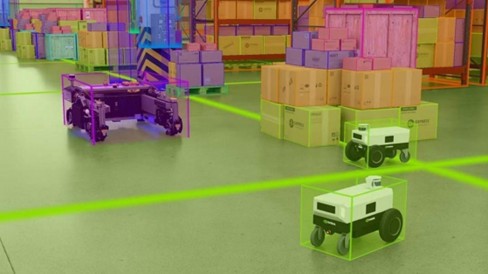
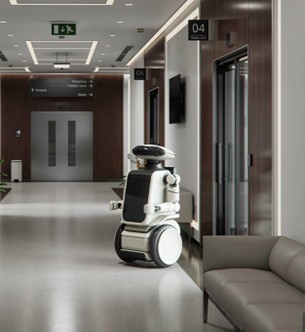
- Physical AI. For robotics and automation, NVIDIA Omniverse, Isaac Sim, Isaac Lab and Jetson provide simulation, training and deployment tools that let customers model environments, generate synthetic data and train autonomous systems before production.
Why should you care?
Many organizations are stuck in AI experimentation. AI workloads, particularly generative AI and agentic AI require exponentially more compute and networking performance than traditional IT environments can provide.
NVIDIA AI factory market differentiators
- Purpose-built AI infrastructure. Tailored for the entire AI lifecycle, not just general compute.
- Faster time-to-value. Pre-engineered, validated designs accelerate deployment and reduce integration risk.
- Superior performance per watt. Specialized GPU compute with optimized networking and orchestration, delivering more intelligence throughput for less energy.
- Scalability, modularity and flexibility. Designed to scale from initial deployments to large enterprise or sovereign AI infrastructures. Can be deployed on premises, in co-location or connected to hybrid cloud solutions.
- Security and operational integration. Built with enterprise-grade security, management and operational tooling as part of the NVIDIA AI stack.
- Digital twin and simulation. Integration with NVIDIA Omniverse allows simulation-first design and ongoing optimization of infrastructure, reducing build and support costs.
- Arrow-backed validation. Reducing customer risk with seamless integration across OEM servers, NVIDIA AI Enterprise and ISV stacks.
For resellers, the NVIDIA AI factory represents:
- Larger deal sizes (infrastructure + software + services)
- Long-term lifecycle engagement (expansion, optimization, support)
- Cross-practice selling (data center, AI software, networking services)
- Strategic account positioning (C-suite engagement)
It shifts conversations from "selling GPUs" to "building AI platform strategy."
How to position and sell
Here are some common customer profiles and the needs that trigger an AI-related discussion:
- Mid-market and enterprise organizations with refresh cycles underway and are looking to modernize their infrastructure to address current compute performance limitations.
- Companies with AI pilots that haven't scaled such as GenAI usage beyond experimentation.
- Manufacturing, Healthcare, Finance, Energy and SLED environments.
- Teams exploring robotics, digital twins or advanced simulations.
Target personas
| Persona | Common objections | Key pain points |
| CIO / CTO | Enterprise AI strategy, digital transformation | Infrastructure ROI, reliability, security |
| Head of AI/ML infrastructure | Scalable model training and deployment | Lack of compute, slow deployment cycles |
| Chief Data Officer | Deriving value from data | Dirty data, high processing costs |
| Head of Manufacturing/Operations | Smart factories, robotics | Legacy automation, poor decision tools |
| Enterprise Architects | Standardizing platforms | Fragmented tools and platforms |
Key discovery and qualification questions
Strategic AI readiness
- What AI workloads are you targeting (training vs. inference vs. agents)?
- Do you have a roadmap for scaling AI across business units?
- What AI use cases have you tested and where are they getting stuck?
- Do you have workloads that require simulation, modeling or digital twins?
Infrastructure
- Is your current data center optimized for AI workloads or general compute?
- What challenges do you face in deploying and managing AI infrastructure today?
- Are you refreshing servers in the next 6-18 months?
- What tools or frameworks do your AI teams already use?
Cost and value
- How are you measuring ROI from existing AI projects?
- What's your tolerance for operational complexity vs. turnkey performance?
- What performance gaps are you noticing with GenAI or data processing?
Operational
- Do you have in-house capabilities for large-scale AI cluster management?
- Do you have any data sovereignty or security/compliance requirements for AI infrastructure?
- How important is multi-workload consolidation to your ROI calculations?
Common objections and suggested responses
Objection: This seems complex and we lack AI expertise internally.
Response: Turnkey stack and managed orchestration systems with partner expertise lower the skill barrier and shorten deployment timelines. Arrow labs and validated architectures reduce risk and simplify deployment.
Objection: AI infrastructure is too expensive.
Response: Highest performance per watt and validated reference designs reduce long-term OPEX and accelerate ROI. Modular scaling reduces upfront commitment. Long-term inference savings often justify CapEx.
Objection: Cloud already covers our needs.
Response: For burst workloads, yes — hybrid flexibility balances performance, cost and compliance; at sustained AI inference scale, AI-optimized infrastructure is often more economical.
Objection: We don't know which workload to prioritize.
Response: Arrow helps map workloads to infrastructure with guided assessments.
Objection: We don't see enough use cases yet.
Response: AI factories deliver near-term value in analytics, automation, simulation and edges into longer-term innovation like autonomous operations or digital twins. They future-proof infrastructure investments.
The bottom line
The NVIDIA AI factory helps organizations build and scale AI faster, combining infrastructure, software and reference architectures to reduce complexity, maximize ROI, modernize during server refreshes, scale pilots to production, support AI workloads in one stack and accelerate time-to-value.
Arrow enables partners with validated architectures, lab access, OEM alignment and enablement programs to deliver production-ready AI solutions, accelerate customer decisions and shift from hardware sales to high-value AI strategy engagements.
More information
- AI Factories Are Redefining Data Centers, Enabling Next Era of AI | NVIDIA Blog
- The Ultimate AI Experience in the Cloud | NVIDIA DGX Cloud
- NVIDIA High-Performance Computing | Advanced Science
Book an AI infrastructure strategy session to assess workload readiness and build your AI factory roadmap with Arrow and NVIDIA.
About the author


